AC Installation and Repair in Eustis, FL
In central Florida, a working air conditioner is not a luxury. Temperatures regularly climb into the mid to upper nineties from late spring through early fall, and humidity makes every degree feel worse. When your AC stops working or stops working well, getting it fixed is not something you put off until next month.
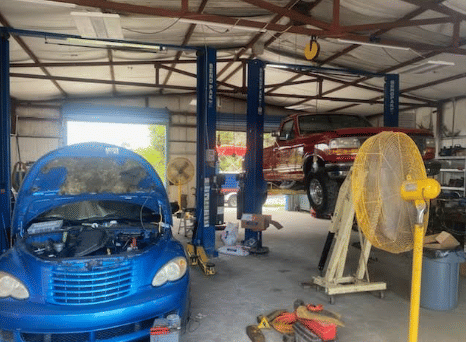
At RJ Fox Automotive, we handle the full range of automotive AC work, from diagnosing a system that has lost cooling capacity to installing a new compressor, condenser, or evaporator on a vehicle that needs a major repair. We pressure test the system, find leaks, replace worn components, and recharge with the correct refrigerant so the repair lasts rather than being a temporary fix.
How Your Car's AC System Works
Understanding the basic layout of an automotive AC system helps explain why a proper diagnosis matters before replacing any parts. The system is a closed refrigerant loop with several major components working in sequence.
The compressor is driven by the engine via a belt and pressurizes the refrigerant. It is the heart of the system and the most expensive component. Compressor failures are often caused by refrigerant loss, since the refrigerant also carries the oil that lubricates the compressor internally. Running a system low on refrigerant starves the compressor of lubrication and accelerates wear significantly.
The condenser sits in front of the radiator and releases heat from the pressurized refrigerant into the outside air. It is vulnerable to damage from road debris and insects and can develop leaks at the fins or at the inlet and outlet connections.
The expansion valve or orifice tube drops the pressure of the refrigerant rapidly, which causes it to cool down dramatically before it enters the evaporator.
The evaporator sits inside the dashboard and absorbs heat from the cabin air as the blower fan pushes air across it. The refrigerant picks up that heat and carries it back to the compressor to start the cycle again. Evaporator leaks are common in older vehicles and in Florida's humid climate, and evaporator replacement is one of the more labor-intensive AC jobs because of its location inside the dashboard.
The receiver-drier or accumulator filters moisture and debris from the refrigerant. It should be replaced whenever the system is opened for a major repair.
What AC Repair and Installation Involves
No two AC jobs are identical because the system can fail in different ways at different points. Here is how we approach every AC repair.
System diagnosis first. We check the refrigerant pressure on both the high and low sides, inspect visible components for obvious damage, check the compressor clutch engagement, and verify blower motor and electrical function. This tells us whether the problem is refrigerant loss, a component failure, or an electrical issue before we start pulling anything apart.
Leak detection when needed. If the system is low on refrigerant, we find the leak before recharging. Adding refrigerant to a leaking system is a temporary fix at best. We use UV dye and electronic leak detectors to trace leaks to their source, whether that is a fitting, a hose, the condenser, the evaporator, or the compressor shaft seal.
Component replacement with proper flushing. When a major component like the compressor fails, metal particles contaminate the refrigerant and circulate through the system. Simply installing a new compressor without flushing the system and replacing the receiver-drier sends that contamination directly into the new part. We flush the system and replace the drier on every major AC repair.
Recharge to specification. Every vehicle has a specific refrigerant charge weight listed in the service information. Overcharging and undercharging both reduce cooling performance and can damage components. We charge to the manufacturer's specification, not until the gauges look approximately right.
Signs Your AC System Needs Repair
- Warm or barely cool air from the vents even with the AC set to maximum cold
- Takes a long time to cool the cabin, noticeably longer than it used to
- Clicking or grinding noise when the AC engages, often pointing to a failing compressor clutch or compressor bearing
- Musty or mildewy smell from the vents, caused by mold or bacteria growth on the evaporator core
- AC works intermittently, cooling well sometimes and blowing warm other times
- Visible oil staining around fittings, the compressor, or the condenser, which indicates a refrigerant and oil leak at that point
- AC performance has declined gradually over one or two seasons, which often indicates a slow refrigerant leak
Florida Heat and Your AC System
The Florida climate is harder on automotive AC systems than most parts of the country. The system runs at full capacity for more months out of the year, the heat cycles are more severe, and the humidity accelerates corrosion of metal components and degradation of rubber seals and hoses.
Refrigerant loss is almost never normal. If your system is low on refrigerant, there is a leak somewhere, and that leak will continue after a recharge. We find the leak and fix it rather than topping off the system and sending you on your way. A recharge without a leak repair just means you are back in the same situation in six months.
Getting your AC inspected before the hottest months is the best way to avoid the rush. Every spring our schedule fills with customers who waited until the AC failed completely on the first ninety-degree day of the year. A quick inspection in February or March takes an hour and can catch problems before they leave you without AC in June.