Battery Testing and Replacement in Eustis, FL
A dead battery is one of the most common reasons drivers end up stranded, and it is almost always preventable. Batteries do not usually fail without warning. They degrade gradually, and a load test catches a weakening battery before it leaves you in a parking lot on a hot afternoon. At RJ Fox Automotive, we test the battery and the full charging system before recommending any replacement so you know exactly what you are dealing with.
How Florida Heat Affects Your Battery
Most people associate battery failure with cold weather, and cold is genuinely hard on batteries. What fewer people realize is that heat kills batteries faster than cold does. The electrochemical reactions inside a battery accelerate in high temperatures, which speeds up internal corrosion and breaks down the battery's capacity over time. A battery that might last five years in a northern climate can wear out in three years or less here in central Florida.
The heat also increases water loss from the battery's electrolyte, which accelerates plate degradation. And because Florida summers are long, your vehicle's AC system runs at full capacity for more months out of the year, putting a higher continuous load on the battery and alternator than vehicles in cooler climates experience.
The practical result is that Florida drivers should be proactive about battery testing rather than waiting for symptoms to appear. A battery that is three years old and has never been tested is worth checking regardless of whether anything seems wrong.
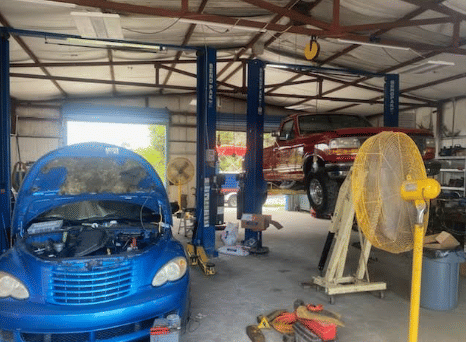
Battery Testing vs. Just Replacing It
Some shops replace batteries without testing them first, particularly if the customer comes in with a dead battery or a complaint about slow cranking. We test before we replace because the battery is not always the actual problem.
A battery that keeps dying after replacement usually means the alternator is not charging it properly, or something in the vehicle is drawing current from it while it is parked. Replacing the battery in that situation gives you a few days of relief before the new battery is dead too. Testing the full charging system first identifies whether the battery, the alternator, or a parasitic draw is responsible, so the right component gets replaced rather than the most obvious one.
On the other side, a battery that tests below specification on a proper load test should be replaced even if it still starts the vehicle on good days. A battery that is marginal will fail suddenly when conditions are challenging, whether that is a hot afternoon after the car has been sitting in the sun, a cold morning after an unusually cool night, or simply one start too many. Catching it in the shop on a test is better than catching it in a parking lot.
What Battery Service Includes
- Load test to measure the battery's actual capacity under the current draw a starter requires
- State of charge check to verify the battery is fully charged before load testing
- Terminal and cable inspection for corrosion, looseness, or damage
- Alternator output test to confirm the charging system is maintaining proper voltage while the engine runs
- Basic parasitic draw check if the battery has been dying while the vehicle sits
- Battery replacement with a correctly sized unit for your vehicle if the test confirms replacement is needed
- Terminal cleaning and anti-corrosion treatment on installation
Warning Signs Your Battery Needs Attention
- Slow or labored cranking when starting, where the engine turns over sluggishly before catching
- Clicking with no cranking when you turn the key, indicating the battery does not have enough charge to engage the starter
- Battery warning light on the dashboard, which can indicate either a battery or charging system fault
- Headlights that are noticeably dim, particularly at idle when the alternator output is at its lowest
- Electrical accessories behaving strangely such as windows moving slowly or the radio resetting
- Battery that is three years old or more and has never been tested, particularly if the vehicle sits for extended periods
- Visible corrosion on the battery terminals, which increases resistance in the circuit and can cause starting problems even with a healthy battery
- Battery that needed a jump start recently, even once; a healthy battery does not need jumping under normal circumstances
Choosing the Right Replacement Battery
Not every battery fits every vehicle. The replacement battery needs to match the original in group size, cold cranking amps, and reserve capacity. Vehicles with start-stop systems, large numbers of electronic accessories, or AGM battery requirements need specific battery types that not every replacement unit satisfies.
We source the correct replacement for your specific vehicle rather than installing whatever is closest in size. Installing an undersized battery in a vehicle that demands more capacity leads to premature failure and puts stress on the charging system.