Wheel Alignment in Eustis, FL
Wheel alignment is the adjustment of the angles at which your tires contact the road surface. When those angles are within the manufacturer's specification, the vehicle drives straight, the tires wear evenly, and the steering has the feel and precision it was designed to have. When the alignment is off, even slightly, the effects show up as pulling, wandering, uneven tire wear, and a steering wheel that sits crooked on a straight road.
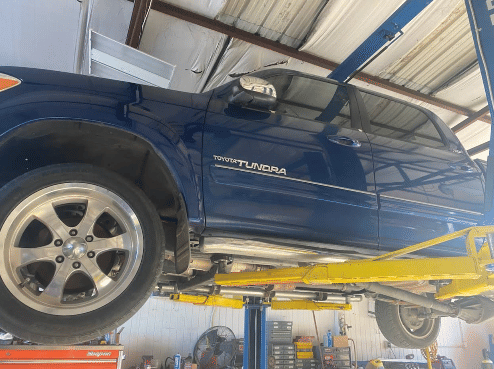
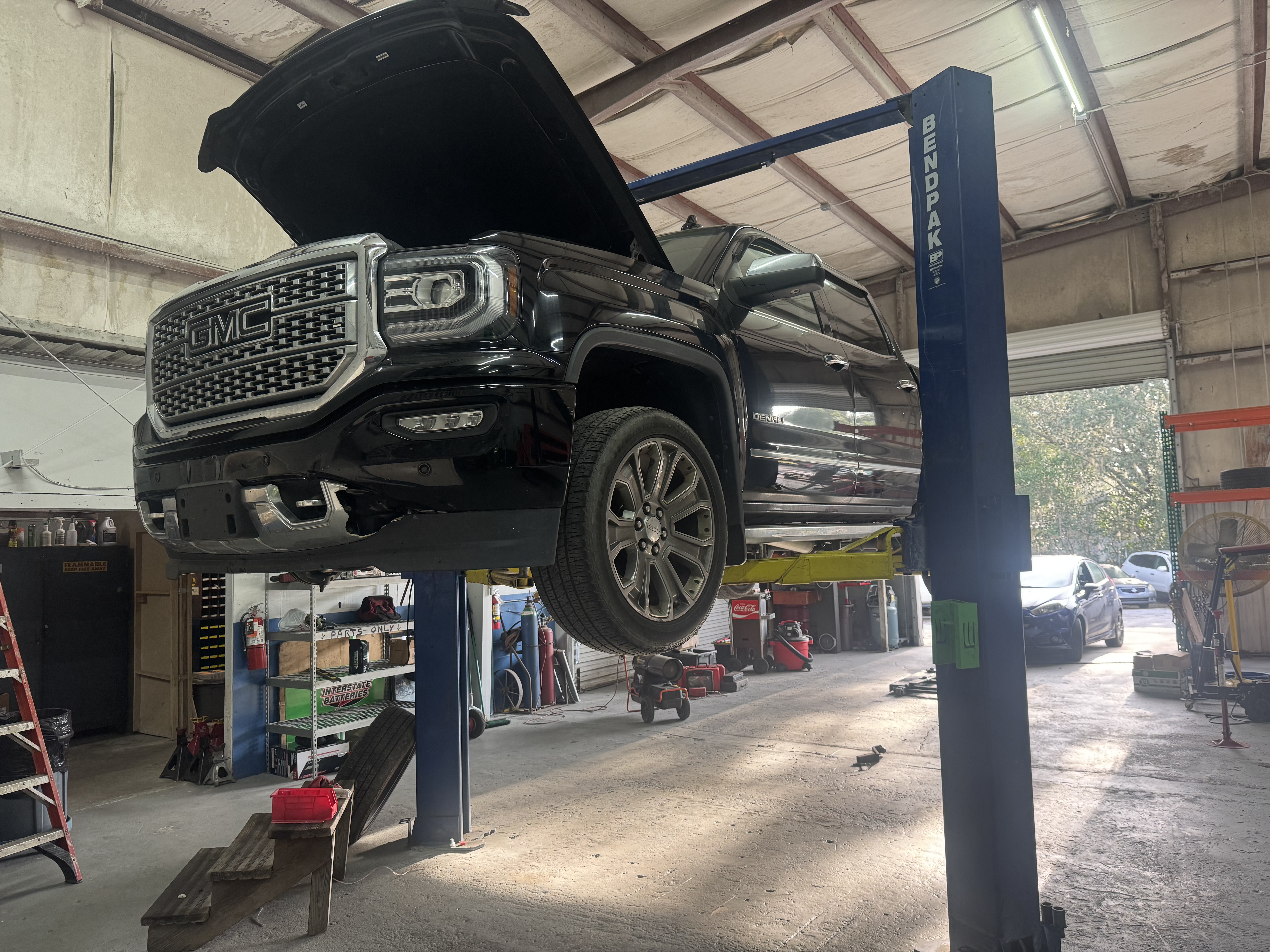
At RJ Fox Automotive, we perform precision wheel alignments using proper alignment equipment and we check the suspension for worn components before adjusting anything. Aligning a vehicle with worn tie rods or ball joints produces an alignment that will not hold, and it masks a safety issue that needs to be addressed. We check the suspension first, tell you what we find, and align once the vehicle is in the condition where the alignment will actually hold and be accurate.
What Wheel Alignment Involves
A wheel alignment measures and adjusts three primary angles that determine how each wheel sits relative to the road and relative to the other wheels.
Toe is the angle of the tire when viewed from above, describing whether the fronts of the tires point inward toward each other or outward away from each other. Toe is the alignment angle that has the biggest effect on tire wear. Even a small amount of incorrect toe causes the tires to scrub sideways as the vehicle moves forward, which wears the tread rapidly on the inside or outside edge. Toe is also the most common alignment angle to go out of specification from normal driving and road impacts.
Camber is the angle of the tire when viewed from the front, describing whether the top of the tire leans inward or outward. Incorrect camber causes wear on the inside or outside edge of the tire and affects handling in corners. Camber is less commonly adjustable on modern vehicles than it used to be, but when it is out of specification it usually indicates a worn or bent suspension component rather than just a need for adjustment.
Caster is the angle of the steering axis when viewed from the side, which affects steering feel, straight-line stability, and returnability after a turn. Caster is not directly related to tire wear but affects how the vehicle drives. Incorrect caster is often caused by a bent strut, a shifted subframe after a collision, or worn control arm bushings.
When Alignment Is Needed
Alignment does not have a fixed service interval the way oil changes do, but there are specific situations that call for it and symptoms that indicate it is overdue.
- After any suspension or steering component replacement: tie rods, control arms, struts, and ball joints all affect alignment angles; replacing them requires a realignment to verify the angles are correct with the new components
- After a significant impact: hitting a curb, a large pothole, or road debris hard enough to feel it in the steering or suspension can knock alignment angles out of specification immediately
- After ADAS-related work: some manufacturers require alignment verification or recalibration alongside ADAS calibration since ride height affects camera angles
- When buying new tires: installing new tires on a vehicle with incorrect alignment means the new tires will wear unevenly from the first mile
- Once or twice a year as preventive maintenance: alignment angles shift gradually from road impacts, speed bumps, and normal driving; periodic checks catch small deviations before they cause significant tire wear
Symptoms of Incorrect Alignment
- Vehicle pulls to one side on a straight, level road when you release the steering wheel briefly
- Steering wheel sits off-center when driving straight on a level surface
- Tires wearing unevenly, with the inside or outside edge wearing faster than the rest of the tread width
- Steering that feels imprecise or requires constant small corrections to hold a straight line
- Feathering or sawtooth wear pattern across the tread, which is caused by incorrect toe and is visible when you run your hand across the tread from side to side
- Vehicle wanders at highway speeds in a way that feels loose or vague rather than responsive
Alignment and Tire Life
The connection between alignment and tire life is direct and significant. Tires are expensive, and most premature tire wear is preventable with proper alignment. A vehicle that is consistently out of alignment by a modest amount can wear through a set of tires in 20,000 miles that should have lasted 50,000. The cost of an alignment is a fraction of the cost of a set of tires.
We recommend verifying alignment whenever new tires are installed and at least once a year for vehicles driven on Florida's roads regularly. Lake County's mix of older road surfaces, construction zones, and speed bumps gives alignment angles plenty of opportunities to shift between service visits.
Alignment After Suspension Work
Any time a suspension or steering component is replaced, an alignment must follow. This is not optional. Replacing a tie rod, for example, changes the toe angle from whatever it was before because the new component is not installed at the exact same length and position as the one it replaced. The same applies to control arms, struts, and any other component that affects wheel geometry.
We include an alignment check recommendation with every suspension repair we perform and make it easy to have both done in the same visit so you leave with a vehicle that is fully corrected, not just mechanically repaired.